MercoPress. South Atlantic News Agency
Economy
-
Monday, November 9th 2026 - 03:07 UTC
Lost savings and broken trust: life for those hit by Ueno Bank’s closure

For nearly three million Paraguayans, November 3 began with a message on their phone screens: “We cannot display your balance.” Early that morning, Paraguay’s Central Bank took over Ueno Bank over a critical solvency problem and froze its deposits. A week later, with President Santiago Peña removed from office and in pre-trial detention, many of those affected still have no access to their money and say they have also lost faith in the country’s institutions.
Add your comment! -
Friday, November 6th 2026 - 00:51 UTC
Big Tech loses a trillion dollars in a day after the Democratic win

Shares in major technology companies plunged on Wall Street on Thursday and in Asian markets on Friday, in a sell-off that wiped hundreds of billions of dollars of market value, on fears that the Democratic victory in the US midterm elections will slow the expansion of data centres and artificial intelligence. The so-called magnificent seven, including Apple, Nvidia and Tesla, together lost a trillion dollars in a single session, according to the BBC.
Add your comment! -
Thursday, November 5th 2026 - 22:12 UTC
Paraguay’s Santiago Peña tenders his resignation, but Congress presses ahead with impeachment
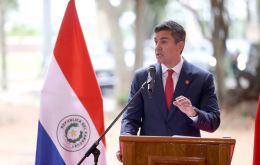
Paraguayan President Santiago Peña tendered his resignation on Thursday, cornered by the collapse of Ueno Bank, but minutes later the Chamber of Deputies unanimously voted to impeach him, in an attempt to prevent him from taking up a lifetime Senate seat with immunity from prosecution once he leaves office. The final decision rests with the Senate.
Add your comment! -
Thursday, November 5th 2026 - 07:08 UTC
Paraguay seeks to return part of the savings frozen at Ueno Bank within 24 hours
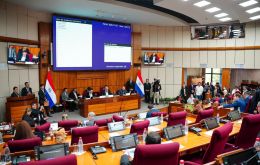
Paraguay’s Senate on Wednesday approved a reform of the deposit guarantee law that would allow customers of Ueno Bank, taken over by the Central Bank on Tuesday, to receive an advance of up to 40 minimum wages, about 121 million guaraníes, within 24 hours of the bank’s resolution. The bill now goes to the Chamber of Deputies, which was due to consider it on Thursday.
Add your comment! -
Wednesday, November 4th 2026 - 08:27 UTC
Paraguay takes over Ueno Bank, with 3 million customers, and freezes its deposits

Paraguay’s Central Bank on Tuesday took over Ueno Bank, one of the country’s largest banks, after its solvency ratio fell below 50% of the legal minimum, and froze all its assets and liabilities, including the savings of some 3 million customers and more than US$800 million in public funds. The bank immediately suspended all its services.
Add your comment! -
Wednesday, November 4th 2026 - 08:00 UTC
Markets react to the US midterms: the dollar falls and gold rises

The US dollar weakened against major currencies on Wednesday morning and gold rose more than 2% to above US$4,000 an ounce as markets assessed the Democratic victory in the midterm elections, which will give the opposition control of both chambers of Congress for the final two years of Donald Trump’s presidency.
Add your comment! -
Friday, October 30th 2026 - 18:18 UTC
Hackers steal US$6.3 billion in crypto from Binance in the sector’s biggest-ever heist

Hackers stole about US$6.3 billion in cryptocurrency from Binance, the world’s largest digital asset exchange, in the biggest theft in the sector’s history, which the US Secret Service is investigating with other agencies. Blockchain analytics firms point to a hacking group linked to North Korea, though there has been no official attribution.
-
Friday, October 30th 2026 - 01:00 UTC
Shell and TotalEnergies double profits on a refining boom

European oil majors Shell and TotalEnergies doubled their profits in the third quarter of 2026 and posted their best quarterly results since 2022, driven by refining margins almost four times higher than a year earlier amid tensions in the Middle East, according to results published on Thursday. Both expanded their share buyback programmes.
-
Thursday, October 29th 2026 - 16:26 UTC
The IMF urges Argentina to “stay the course” despite doubts over growth and country risk
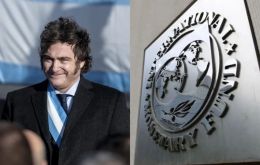
The International Monetary Fund (IMF) on Thursday urged Argentina’s government to stick with its economic programme as the best way to reduce country risk, and set out four measures to turn the gains of stabilisation into growth and jobs, at a time when the press is warning of a possible technical recession.
-
Thursday, October 29th 2026 - 14:49 UTC
Falklands unveil 2026-2030 Islands Plan, with a sovereign wealth fund for energy revenues

The Falkland Islands Legislative Assembly on Thursday published the Islands Plan 2026-2030, the programme of government for the current Assembly, which provides for a sovereign wealth fund so that energy sector revenues benefit future generations and acknowledges that the government faces some of the largest projects in its history, with a capital programme of more than £300 million. Executive Council formally adopted the Plan on October 27.

