MercoPress. South Atlantic News Agency
Brazil
-
Tuesday, October 6th 2026 - 22:15 UTC
Lula targets non-voters and over-70s to overturn the first-round result
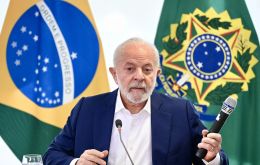
Brazilian President Luiz Inácio Lula da Silva will focus his campaign for the October 25 runoff on mobilising those who did not vote on Sunday, particularly people over 70, and on winning over centrist voters, after finishing almost two points behind Senator Flávio Bolsonaro in the first round.
Add your comment! -
Monday, October 5th 2026 - 17:30 UTC
São Paulo stocks jump 8% and the real firms after Bolsonaro's first-round win
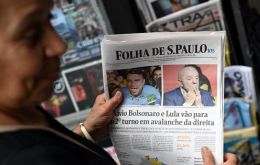
Brazilian markets rallied sharply on Monday in response to the first round of the presidential election, in which Senator Flávio Bolsonaro finished ahead of President Luiz Inácio Lula da Silva, contrary to what polls had predicted. The São Paulo Stock Exchange's Bovespa index rose as much as 8% in early trading, above 208,000 points.
2 comments -
Monday, October 5th 2026 - 17:18 UTC
“The end of the PT era is decreed,” says Flávio Bolsonaro after winning the first round
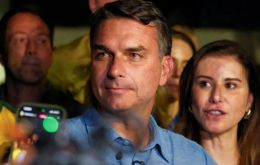
Senator Flávio Bolsonaro celebrated his first-round victory in Brazil's presidential election in Brasília with a message focused on change. “Change, the word is change. Brazil can't take any more. The end of the PT era is decreed,” he told reporters outside his campaign headquarters.
Add your comment! -
Monday, October 5th 2026 - 17:08 UTC
Lula bets on education and non-voters to overturn the result in the runoff
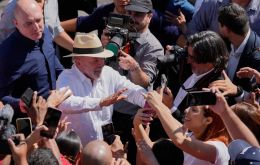
Brazilian President Luiz Inácio Lula da Silva has set education, research and industrial policy as the pillars of his campaign for the October 25 runoff, and urged the more than 30 million Brazilians who abstained on Sunday to vote, after finishing behind Senator Flávio Bolsonaro in the first round.
Add your comment! -
Monday, October 5th 2026 - 10:30 UTC
Flávio Bolsonaro edges Lula in the first round; both head to an October 25 runoff

Senator Flávio Bolsonaro won around 47% of valid votes in the first round of Brazil's presidential election on Sunday, ahead of President Luiz Inácio Lula da Silva, who took about 45%, according to the Superior Electoral Court's count. As neither passed half of the valid votes, the two will face each other in a runoff on October 25.
Add your comment! -
Sunday, October 4th 2026 - 08:57 UTC
Trump declines to back Lula or Flávio Bolsonaro as Brazil votes
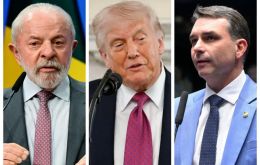
US President Donald Trump has not endorsed either of the two leading candidates in Brazil's presidential election on Sunday, unlike in recent elections in Honduras, Colombia, Chile, Argentina and Costa Rica.
Add your comment! -
Saturday, October 3rd 2026 - 07:36 UTC
Alternative media and Trump are influencing Brazilian voters
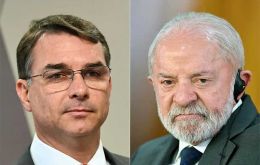
By Gwynne Dyer - “Flávio Bolsonaro is Trump’s candidate and what Trump wants is to colonize Brazil, take our riches, steal our future and leave us in the dust,” claims the latest video released by President Luiz Inácio ‘Lula’ da Silva’s re-election campaign.
Add your comment! -
Saturday, October 3rd 2026 - 07:06 UTC
Brazil votes with Lula and Flávio Bolsonaro tied and a small group of undecided voters holding the key
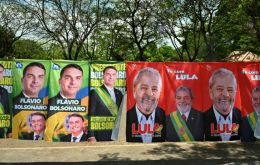
Brazil holds the first round of its presidential election on Sunday, with President Luiz Inácio Lula da Silva and Senator Flávio Bolsonaro tied in a prospective runoff and a narrow band of undecided voters, along with abstention, able to tip the result.
Add your comment! -
Friday, October 2nd 2026 - 07:53 UTC
Brazil heads to the polls without a single debate between Lula and Flávio Bolsonaro

Brazilian broadcaster Globo on Thursday cancelled, an hour before it was due to start, the last presidential debate scheduled before Sunday's first round, following a series of court rulings and the absence of both President Luiz Inácio Lula da Silva and Senator Flávio Bolsonaro. The two leading candidates thus head to the polls without having faced each other in a single televised debate during the entire campaign.
3 comments -
Tuesday, September 29th 2026 - 21:37 UTC
Lula remark on medical exams sparks controversy five days before the vote
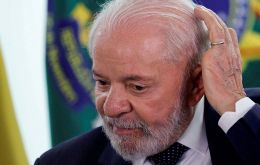
A remark by Brazilian President and re-election candidate Luiz Inácio Lula da Silva about men's reluctance to undergo prostate examinations has sparked a controversy in the final stretch of the campaign, after opposition figures linked it to child sexual abuse. Lula's campaign has taken the matter to the Superior Electoral Court.
4 comments

