MercoPress. South Atlantic News Agency
Energy & Oil
-
Friday, May 1st 2026 - 07:44 UTC
Brent touches $126 amid US military plan for 'short and powerful' strikes on Iran
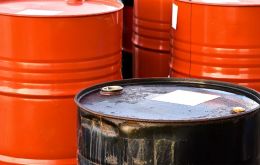
Brent crude touched $126.41 a barrel on Thursday, its highest level since Russia's invasion of Ukraine in 2022, after Axios reported that the US Central Command (CENTCOM) was preparing a military plan contemplating a wave of “short and powerful” strikes on Iranian infrastructure to force Tehran back to the negotiating table. The price subsequently moderated to close near $114, a decline partly attributed to the expiration of the June futures contract, but the European benchmark has gained more than 60% since the start of the war against Iran on February 28.
Add your comment! -
Wednesday, April 29th 2026 - 13:46 UTC
US/Iran war lifting oil prices, but benefiting countries such as Australia, Norway and Brazil

The US-Iran conflict has propelled currencies from energy-exporting countries into the limelight, with windfall profits from exports of oil, gas and metals helping them to outperform the US dollar.
Add your comment! -
Tuesday, April 28th 2026 - 19:20 UTC
United Arab Emirates leaves OPEC amid energy crisis fueled by Iran war
The United Arab Emirates announced on Tuesday its withdrawal from the Organization of the Petroleum Exporting Countries (OPEC) and the broader OPEC+ alliance, in a decision taking effect on May 1 that constitutes one of the most significant blows to the oil cartel in its more than six decades of existence. The announcement comes amid the largest energy crisis in years, triggered by the closure of the Strait of Hormuz during the war between the United States and Iran launched on February 28, and on the eve of the OPEC meeting scheduled for Wednesday in Vienna.
Add your comment! -
Friday, April 24th 2026 - 19:40 UTC
Hormuz closure keeps Brent above $105 with outlook uncertain

Brent crude closed on Friday at $105.33 a barrel, accumulating a gain of nearly ten dollars from the start of the week, in a market dominated by uncertainty over the US-Iran conflict and the prolonged closure of the Strait of Hormuz. The European benchmark crude touched $107.40 on Thursday — its weekly peak — before moderating its advance.
-
Thursday, April 23rd 2026 - 11:51 UTC
Iran attacks ships in Hormuz as Trump extends ceasefire without conditions and faces domestic backlash

US President Donald Trump extended the ceasefire with Iran on Tuesday without setting a deadline, hours before his own two-week truce was set to expire without a deal. The decision came as Iran attacked two container ships in the Strait of Hormuz on Wednesday, with the White House declining to characterise the strikes as a ceasefire violation on the grounds that neither vessel was American or Israeli.
-
Monday, April 20th 2026 - 19:14 UTC
Cuba confirms meeting with US representatives in Havana, insists on lifting energy blockade

Cuba's government on Monday confirmed that a meeting with US representatives recently took place on the island, in the latest sign of a diplomatic approach between both countries amid a severe energy crisis caused by Washington's blockade of oil supplies.
-
Saturday, April 18th 2026 - 10:58 UTC
Iran closes Hormuz again after less than 24 hours as two ships report being fired upon
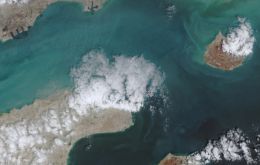
Iran's reopening of the Strait of Hormuz lasted less than 24 hours. The Islamic Revolutionary Guard Corps declared on Saturday that it had reimposed “strict control” over the maritime corridor, through which roughly one-fifth of the world's oil and liquefied natural gas transits. At least two vessels reported being hit by gunfire while attempting to cross the strait, according to three maritime security sources cited by Reuters. It has not been confirmed whether the shots caused damage.
-
Saturday, April 18th 2026 - 02:53 UTC
Uruguayan court rejects injunction against offshore seismic prospection, allowing exploration to continue

A Montevideo civil court dismissed an injunction filed by social organizations and fishing industry unions against seismic prospection activities for hydrocarbon exploration in Uruguay's exclusive economic zone, allowing operations by the company Viridien (CGG Services) to continue on an offshore block assigned to oil major Chevron.
-
Friday, April 17th 2026 - 21:42 UTC
Iran declares Hormuz “fully open” until ceasefire ends; Trump insists on keeping Iranian port blockade
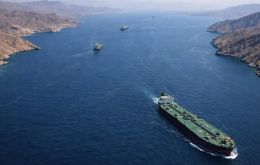
Iran announced on Friday that the Strait of Hormuz will remain “fully open” to merchant shipping until the ceasefire with the United States expires next Wednesday. The decision, linked to the start of the 10-day truce between Israel and Lebanon announced by Trump on Thursday, triggered an immediate drop in oil prices of nearly 10% and strong relief across global markets.
-
Monday, April 13th 2026 - 21:52 UTC
Tankers turn back at Hormuz as crude jumps over 4% on US blockade
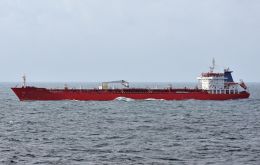
Two oil tankers reversed course as they approached the Strait of Hormuz on Monday, just hours after the US naval blockade against Iranian ports took effect, according to maritime tracking platform MarineTraffic. Brent crude for June delivery closed up 4.4% at $99.36 per barrel, while US benchmark WTI rose 2.6% to $99.08, according to Bloomberg.

